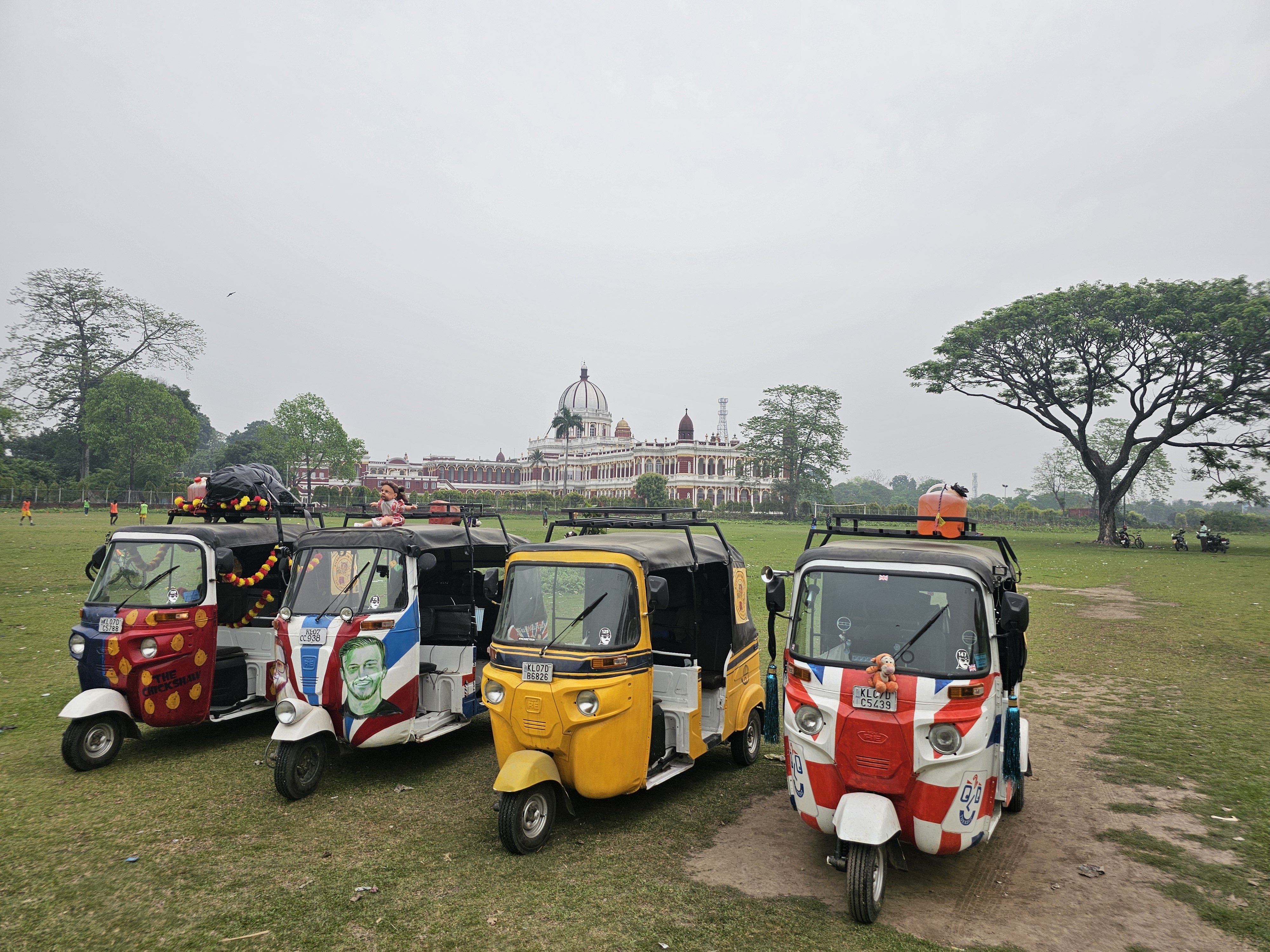
The premise of the Rickshaw Run is simple and absurd in equal measure. You buy a tiny auto-rickshaw — a 7-horsepower three-wheeled vehicle designed for short trips across town — and you drive it approximately 5,000km across India. There is no set route, no support vehicle, and no one coming to rescue you when things go wrong. Things go wrong constantly.
Our rickshaw had a top speed of about 55km/h on a good day, which in practice meant every truck, bus, cow, and bicycle on Indian roads was overtaking us. The brakes were the first thing to go. They failed at the top of a ridgeline — not ideal. We tightened them as a temporary fix, enough to limp down the hill, but then overtightened and the brake lever literally snapped off. Fixing that properly in the blistering heat of Kerala in April was not a pleasant afternoon. We ran out of petrol multiple times, lost the fuel cap somewhere in Karnataka, and at one point spilled an entire jerry can of petrol inside the tuk-tuk. The two-stroke oil was measured entirely by eye — no measuring cup, no ratio, just a hopeful pour and a prayer.
The highlight might have been the river crossing near the Bangladesh border. We lifted the rickshaw bodily onto a small boat — a glorified raft, really — and embarked on a three-hour ferry crossing of one of the largest rivers I have ever seen. Every breakdown and disaster became an impromptu cultural exchange with whichever mechanic, chai stall owner, or curious crowd happened to be nearby. The generosity of strangers was extraordinary.
There is no way to do the Rickshaw Run without developing a very high tolerance for uncertainty, improvisation, and things not going to plan — which, now that I think about it, is also a fairly accurate description of most of my professional career.